





About Drift Escape
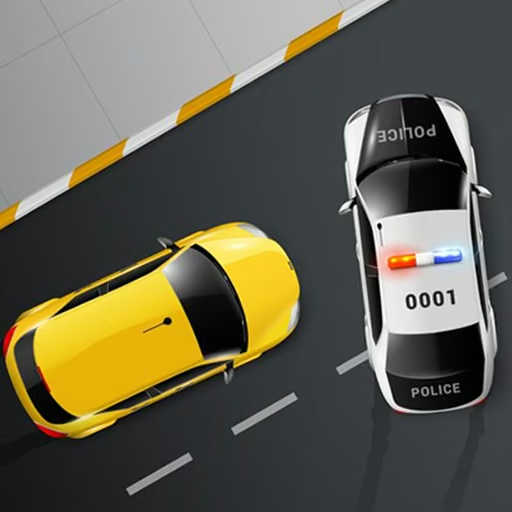
A useful drift in Drift Escape ends with a clear departure from the pursuit. You drive through an urban pursuit, using acceleration, braking, steering, and a handbrake to maneuver around obstacles. Police and military vehicles keep the escape moving, and their approach paths can become an advantage when a well-timed turn leaves them heading into trouble.
The difficult part is connecting the slide to the next stretch of road. A dramatic sideways entry can look successful while pointing the car toward another wall. Think of each maneuver as an approach, a rotation, and a departure. The handbrake helps with the middle stage, but route selection determines whether the whole sequence actually creates room between your car and the pursuit.
How to Play Drift Escape
Drive with WASD or the arrows and use Space for the handbrake. Avoid obstacles, turn away from converging pursuers, and keep the escape route open.
- Accelerate into a section with enough room to learn the car's steering response.
- Choose the exit of an upcoming corner before beginning the maneuver.
- Use steering and a brief handbrake input when you need a sharper rotation.
- Recover the driving line after the slide and continue away from the pursuit.
Controls & Timing
Drift entry
When a corner requires a tighter direction change, establish the approach before applying Space. Starting too close to the obstacle leaves little room for the car to rotate.
Drift exit
As the car points toward the chosen road, ease out of the handbrake and correct the steering. The useful result is forward room, not the longest possible sideways slide.
Pursuit geometry
When a vehicle follows closely, turn around scenery with your own exit already visible. The pursuer's continued approach may take it into an obstacle while you move away.
Controls
| Input | Action | When to use |
|---|---|---|
| W / ↑ | Accelerate | Building speed on a clear section |
| S / ↓ | Brake or reverse | Reducing speed or recovering from an obstruction |
| A / D or ← / → | Steer | Setting the approach and correcting the exit |
| Space | Handbrake | Initiating a sharper sliding turn |
High Score Tips
- Practice one corner with ordinary steering first. Knowing its basic shape helps you judge whether a handbrake input improves the line or only adds unnecessary rotation.
- Use shorter handbrake inputs when the exit is close. A prolonged slide can consume the space needed to accelerate away after the car changes direction.
- Watch pursuers through the route you choose. Turning beside an obstacle is useful when it disrupts their approach without leaving your own car trapped against the scenery.
- Recover speed after alignment, not during confusion. Pointing toward clear road before accelerating reduces the chance that an incomplete slide becomes another collision.
Key Features
- Handbrake control: Space provides a dedicated way to initiate tighter slides.
- Urban hazards: Buildings and roadside objects make the exit of a drift important.
- Active pursuit: Police and military vehicles pressure the route.
- Collision opportunities: Pursuers can be drawn toward obstacles by evasive driving.
Frequently Asked Questions
How do I use the handbrake?
Press Space while steering to help initiate a sharper sliding turn. Choose the exit first, then release and correct the car as it lines up with the road you want to follow.
Is a longer drift always better?
No. The point of the slide is to create a useful change of direction. Holding it too long can point the car away from the exit or consume the room needed to accelerate safely.
Can pursuers crash into obstacles?
Yes. Evasive turns can draw pursuing vehicles toward scenery. Plan your own departure before trying this, because entering the same blocked area leaves you with the problem you wanted them to face.
What should I do after a slide?
Look toward the next open section, settle the steering, and build speed once the car is aligned. A clean departure matters more to the escape than continuing the slide for its appearance.