
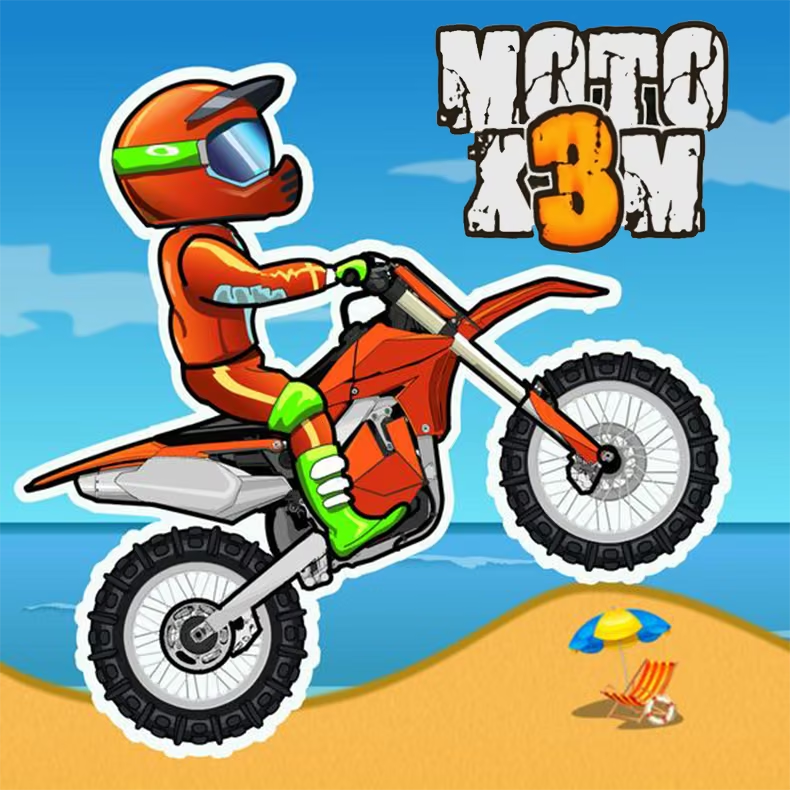







About Moto X3M
In Moto X3M, learn a clean route to the finish before spending that reliability on additional flips. You accelerate, brake, and lean the bike through ramps, moving obstacles, and dangerous landings, trying to reach the finish quickly enough for a better star result. Flips can reduce the recorded completion time, giving aerial control a practical reward.
That reward creates a useful tension. An extra rotation may improve the time if you land it, but a crash can cost far more than the trick was worth. Checkpoints let you continue working through a course, and repeated attempts reveal where speed helps and where a brief wait is more efficient. Learn the obstacle sequence first, then add stunts to the jumps whose landing space you understand.
How to Play Moto X3M
Accelerate with W/up, brake with S/down, and use A/D or the left/right arrows to balance the bike. Reach the finish while avoiding crashes and using safe flips to improve the time.
- Start a level and ride toward the first obstacle with enough control to adjust the bike.
- Use leaning inputs on ramps and in the air to prepare a wheel-first landing.
- Time your movement through traps and use checkpoints to work through difficult sections.
- Finish the course, inspect the star result, and replay with a cleaner line or a safer time-saving flip.
Controls & Timing
Airborne rotation
When a jump provides enough height and landing space, lean to rotate the bike. Stop adding rotation soon enough to match the landing slope instead of forcing another flip near the ground.
Moving hazard
When a trap crosses the route, brake before entering its active space. A short controlled wait can preserve the attempt more effectively than repeatedly arriving at full speed.
Checkpoint learning
After a crash near a checkpoint, focus on the specific approach that failed. Changing one part of the maneuver makes the next attempt informative rather than repeating the same impact faster.
Controls
| Input | Action | When to use |
|---|---|---|
| W / ↑ | Accelerate | Building speed on a clear approach |
| S / ↓ | Brake | Timing a hazard or controlling a landing approach |
| A / ← | Lean backward | Adjusting balance or starting a back rotation |
| D / → | Lean forward | Matching a slope or starting a forward rotation |
High Score Tips
- Learn the landing before adding a stunt. A familiar touchdown tells you whether the jump has room for rotation, while an unseen landing turns the flip into a guess.
- Compare time saved with crash risk. A modest clean run can outperform repeated failed attempts at an extra trick near the end of a course.
- Use brakes before the hazard rather than inside it. Entering at a controlled speed leaves room to react to a moving obstacle or align the bike for the next ramp.
- Replay for one improvement at a time. Cleaning up a single troublesome landing gives a clearer result than changing every jump and losing track of what improved the finish.
Key Features
- Timed courses: Faster completions improve the star result.
- Flip rewards: Successful rotations can reduce the recorded time.
- Checkpoints: Difficult sections can be approached again after a crash.
- Moving obstacles: Timing matters alongside speed and balance.
- Bike rotation: Lean controls work through approaches, jumps, and landings.
Frequently Asked Questions
How do I get more stars?
Complete the level more efficiently, avoiding crashes and unnecessary delays. Successful flips can reduce the recorded time, but a clean landing matters more than attempting an extra rotation that you cannot finish safely.
How do I perform a flip?
Use the left or right leaning input while airborne to rotate the bike. Choose a jump with enough room, then bring the wheels toward the landing angle before the motorcycle reaches the ground.
Should I always hold the accelerator?
No. Braking helps you time moving hazards and control difficult approaches. A brief slowdown can protect the run and save more time than a crash caused by entering every obstacle at full speed.
What should I change after a checkpoint crash?
Identify whether the failure came from speed, rotation, or hazard timing. Adjust that one part of the approach on the next attempt, then keep the change if it produces a more controlled landing or passage.